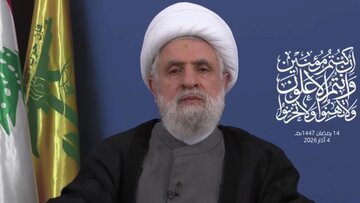
AhlulBayt News Agency (ABNA): Sayedah Faimah Shirazi, a poet, researcher, and scholar at Jamia al-Zahra (a.s.) in Qom, discussed the role of the Prophet’s descendants in Pakistan’s history and the profound reverence Pakistani society holds for the AhlulBayt (a.s.) of Prophet Muhammad (p.b.u.h).
“The Sadaat have always lived in a state of estrangement and migration, and Pakistan has long been a host to them,” she said. “They were noble figures who brought the light of the AhlulBayt to this land, and the traces of their presence remain visible in people’s lives to this day.”
Ms. Shirazi said that in Pakistan, descendants of the Prophet are held in high esteem among both Shiite and Sunni communities. “People stand in respect when they enter gatherings, their affairs are handled with courtesy in public offices, and in the streets and marketplaces they are addressed as ‘Shah’,” she noted, adding that the title reflects “the deep affection and spiritual status they hold among the people.”
She added that Pakistan is home to numerous shrines and mausoleums associated with the Prophet’s lineage, sites that draw widespread devotion and where people seek spiritual solace.
Addressing the origins of the Sadaat’s arrival in the region, Ms. Shirazi described a “painful historical chapter.” During the rule of Hajjaj ibn Yusuf al-Thaqafi, whom she called one of history’s most violent figures, descendants of the AhlulBayt (a.s.) and their supporters were subjected to severe persecution. “As a result, many, especially women and children, fled the Hijaz to save their lives and reached the shores of Sindh by sea,” she said.
According to Ms. Shirazi, it was the refugees’ moral conduct and compassionate character, modeled on the ethics of the AhlulBayt, that drew local populations toward Islam. “When people witnessed their dignity and spiritual radiance, they embraced Islam with love and conviction,” she said.
Explaining the roots of popular respect for the Sadaat, she emphasized that it stems from their being descendants of Lady Fatimah (a.s.), the daughter of the Prophet Muhammad (p.b.u.h). “But this lineage has meaning only when it is reflected in conduct, speech, ethics, modesty, and spirituality,” she said.
She concluded by urging descendants of the Prophet to live up to that legacy, saying they must strive to honor Lady Fatimah (a.s.) through their behavior, “so that we become a source of pride for her, not a cause for shame.”
**************
End/ 345C